Botanical MycoToilet
The Mycotoilet pilot project at the UBC Botanical Garden creates a closed-loop system that returns solid and liquid waste back to ecosystems as nutrient-rich soil and fertilizer.
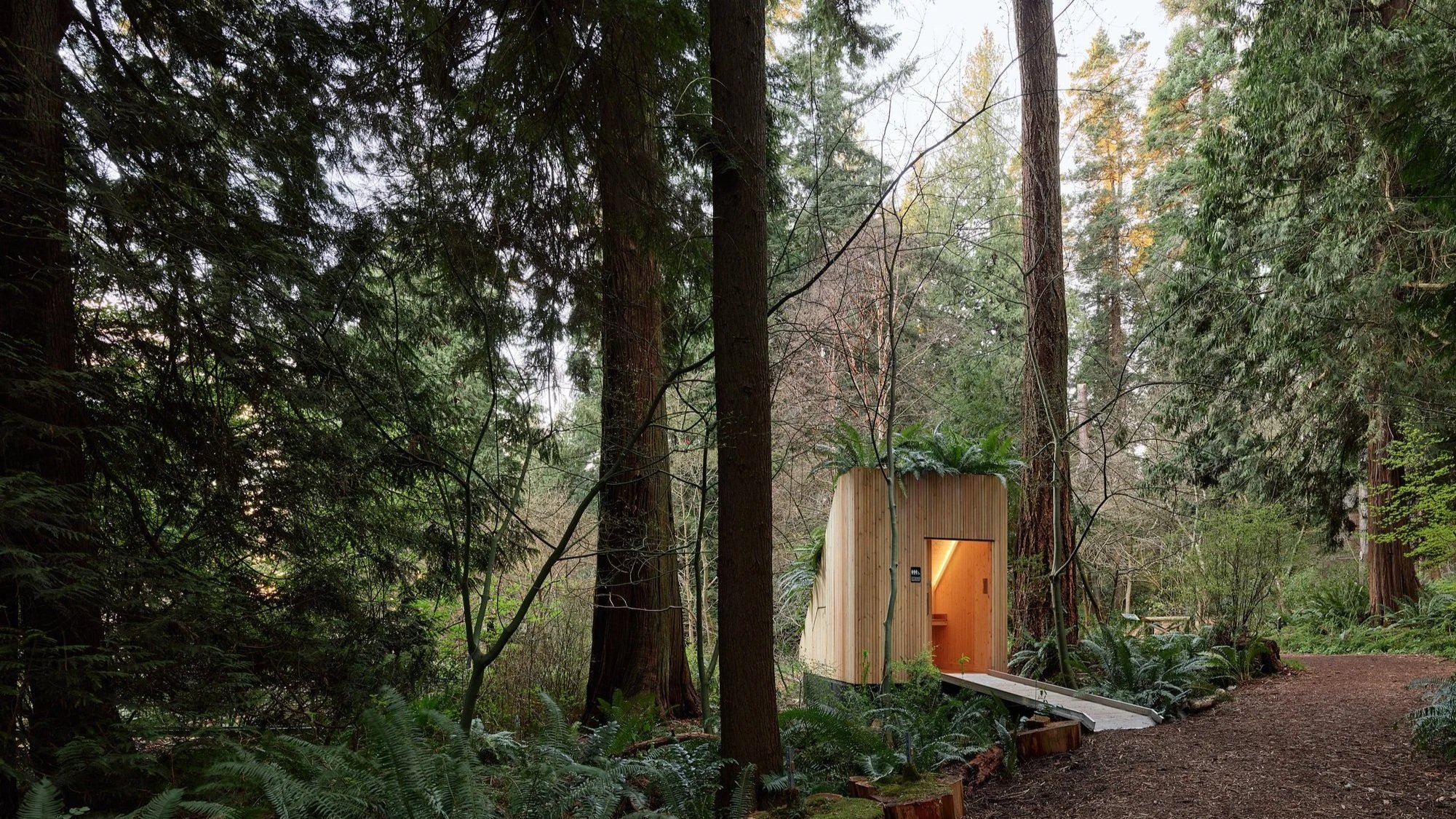
MycoToilet is the world’s first toilet that uses the power of mycelium to convert human waste to valuable soil. It integrates a state-of-the-art waste separating toilet with living mycelium to provide safe and effective on-site waste decomposition. The system is housed in a transportable building made of renewable dowel-laminated timber clad in natural cedar. A planted roof keeps the interior cool, while a balanced solar ventilation system ensures a constant supply of fresh, clean air to the interior. MycoToilet reframes a fundamental human activity as a simultaneous act of regenerative care and reciprocity, transforming waste into a valuable resource that enriches local ecosystems.
Photo: Andrew Latreille
The MycoToilet provides a pleasant experience to the occupants while creating a closed-loop system that returns solid and liquid waste from back to the ecosystem in the form of nutrient-rich soil and fertilizer, aligning with the Garden’s goals of environmental stewardship. The toilet replaces an existing chemical toilet on the site that required weekly servicing throughout the year.
Benefits of Waste Separation
Waste separating toilets are a proven alternative to flush and chemical toilets. They work by separating liquid from solid waste, enabling onsite conversion of solid and liquid waste to valuable fertilizer that can be used to enrich local soils. Waste separating toilets operate naturally, without the need for water, electricity, or other inputs. It is estimated that the project will generate approximately 600 litres of valuable soil and 2,000 litres of liquid fertilizer per year that can be used for operations and maintenance at the Botanical Garden, reducing overall reliance on energy-intensive fertilizers in keeping with ecological sustainability goals at the garden.
Incorporating New Research: A Phased Approach
The project integrates research at UBC School of Architecture and Landscape Architecture and UBC Microbiology to develop the world’s first toilet to use mushrooms and thermophilic microorganisms to break down waste naturally and efficiently. The project opened for pilot testing at the Botanical Garden in Fall 2025. The pilot will provide valuable data to scale to remote communities in Canada and elsewhere that lack access to centralized sewer treatment systems.
News Coverage
UBC News
Lead Researchers
Joseph Dahmen
Steven Hallam
Project Team
Isobel McLean
Lorena Polovina
Juan Santana
Nicholas Lin
Christy-Anna Chung
Jami Holden
Jennifer Lara Rodriguez
Claudio Cabana
Cameron Taylor
Collaborators
UBC School of Architecture and Landscape Architecture MCELL Research Excellence Cluster UBC Department of Microbiology and Immunology
Chris Moraes (McGill University)
Sponsors
New Frontiers in Research—Exploration Fund
Campus as a Living Lab
UBC SEEDS Sustainability Program
BioProducts Institute
Photography
Andrew Latreille www.andrewlatreille.com
Photos: Andrew Latreille
Diagram: Christy-Anna Chung